
Honey Bee Removal & Relocation
Safe Honey Bee Removal From Buildings
Honey bees are essential pollinators and play a vital role in the environment. However, when a colony establishes itself inside a property, it can quickly become a serious issue for homeowners.
Honey bees often nest inside structural cavities such as walls, roofs, chimneys and soffits. Once established, the colony will begin constructing wax comb and storing honey, which can lead to structural damage if not removed correctly.
At Nex Pest Control, we work in collaboration with professional beekeepers at Hitchin Honey to safely remove and relocate honey bee colonies from buildings wherever possible.
This partnership ensures that bee removals are carried out safely, responsibly and with the correct expertise.
If you believe honey bees have moved into your property, contact us for advice and a quote.
Call Nex Pest Control Today
📞 01438 870688
💬 WhatsApp photos to 07853 726348
or
Request a free quote today.
Where Honey Bees Commonly Nest
Honey bees look for sheltered cavities to build their hive. Once they find a suitable entry point they can quickly establish a colony.
Common locations include:
- Wall cavities
- Chimneys
- Roof spaces and lofts
- Soffits and fascia boards
- Air bricks and ventilation openings
- Under roof tiles
- Inside flat roof voids
- Inside cladding or render gaps
- Outbuildings and sheds
In some cases, bees may also form temporary clusters on trees or structures while searching for a permanent nesting location.
Why Honey Bee Colonies Must Be Properly Removed
Attempting to block bees inside a wall or cavity rarely solves the problem and can cause significant damage.
A mature honey bee colony may contain tens of thousands of bees and large amounts of honeycomb.
If the colony is not removed correctly, several issues can occur.
Honey Leakage
A colony can store 20–40kg of honey inside a cavity. If the bees die or abandon the hive, this honey can melt and leak through walls or ceilings.
Structural Damage
Wax comb and stored honey can damage insulation, plasterboard and timber structures.
Secondary Pest Problems
Abandoned honeycomb can attract other pests such as:
- Wax moths
- Ants
Reinfestation
The scent of old honeycomb can attract new swarms to the same location.
For this reason, professional bee removals normally involve removing the colony and the honeycomb.
Our Honey Bee Removal Process
Every honey bee removal is unique, and each situation must be carefully assessed before any work can be undertaken. The removal process depends on the location of the colony, accessibility and the construction of the building.
Step 1 – Bee Identification
The first step is to confirm that the insects are honey bees and not wasps, bumblebees or another species. We ask customers to send clear photographs or videos of the insects where possible. This allows us to identify the species and advise on the most appropriate course of action before arranging a visit.
Step 2 – On-Site Survey
All honey bee removal projects require a professional on-site survey before a removal quotation can be provided.
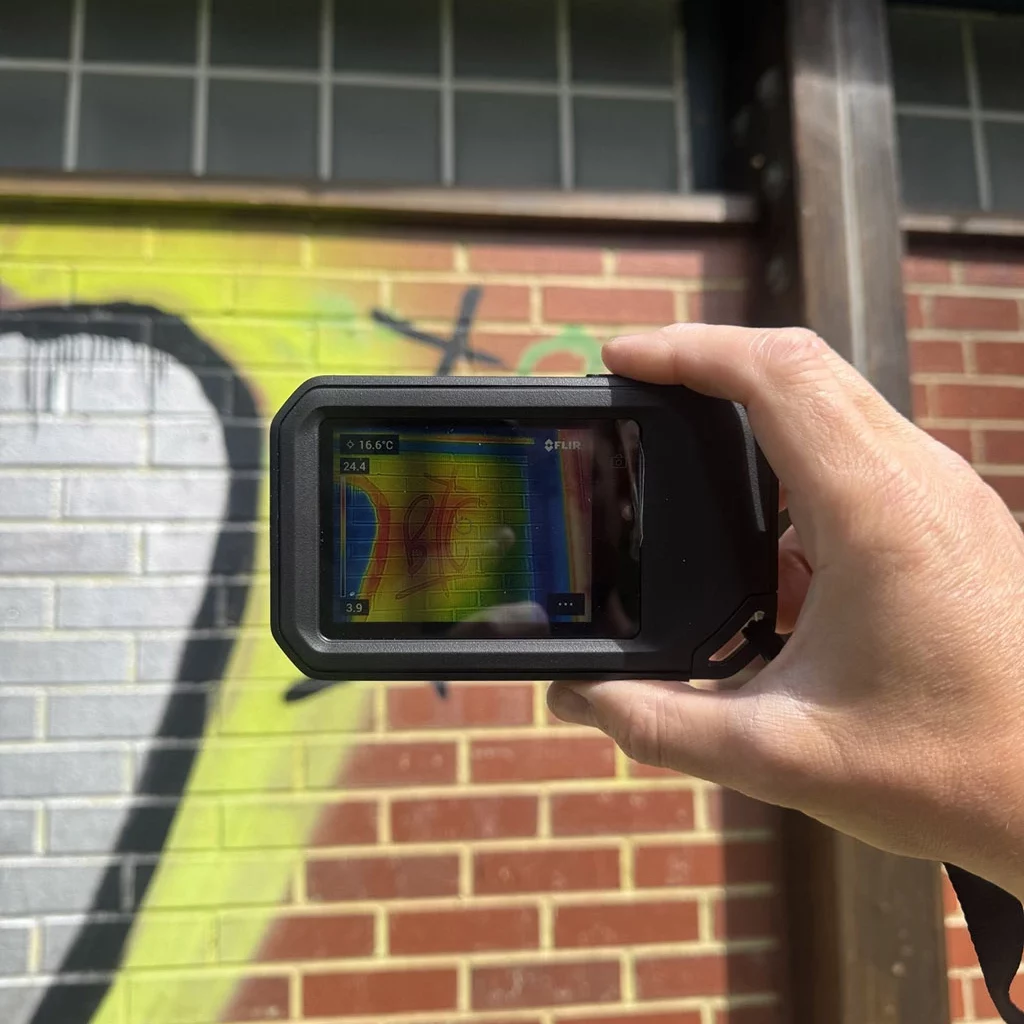
The survey fee is £75.00 and includes a visit to your property to investigate the location of the colony using specialist thermal imaging equipment where appropriate. Thermal imaging helps identify bee colonies hidden within walls, roofs and other structural voids while minimising unnecessary damage to the building.
During the survey, we will gather photographic evidence, assess access requirements and determine the safest and most effective method of removal.
If you choose Nex Pest Control to carry out the honey bee removal, the £75.00 survey fee will be deducted from your final invoice, effectively making the survey free for accepted quotations.
Step 3 – Chimney Surveys
Where honey bees are believed to be nesting within a chimney, specialist access equipment may be required to carry out the survey safely.
In these circumstances, a Mobile Elevating Work Platform (MEWP) or cherry picker may be necessary to inspect the chimney and accurately locate the colony.
The cost of the MEWP hire will be quoted separately before the survey is arranged. Payment for the MEWP is made directly to the cherry picker operator following the survey and is not included within the £75.00 survey fee.
Step 4 – Removal Plan & Quotation
Once the survey has been completed, we will provide a detailed quotation outlining the recommended removal method, any access equipment required and the anticipated work involved.
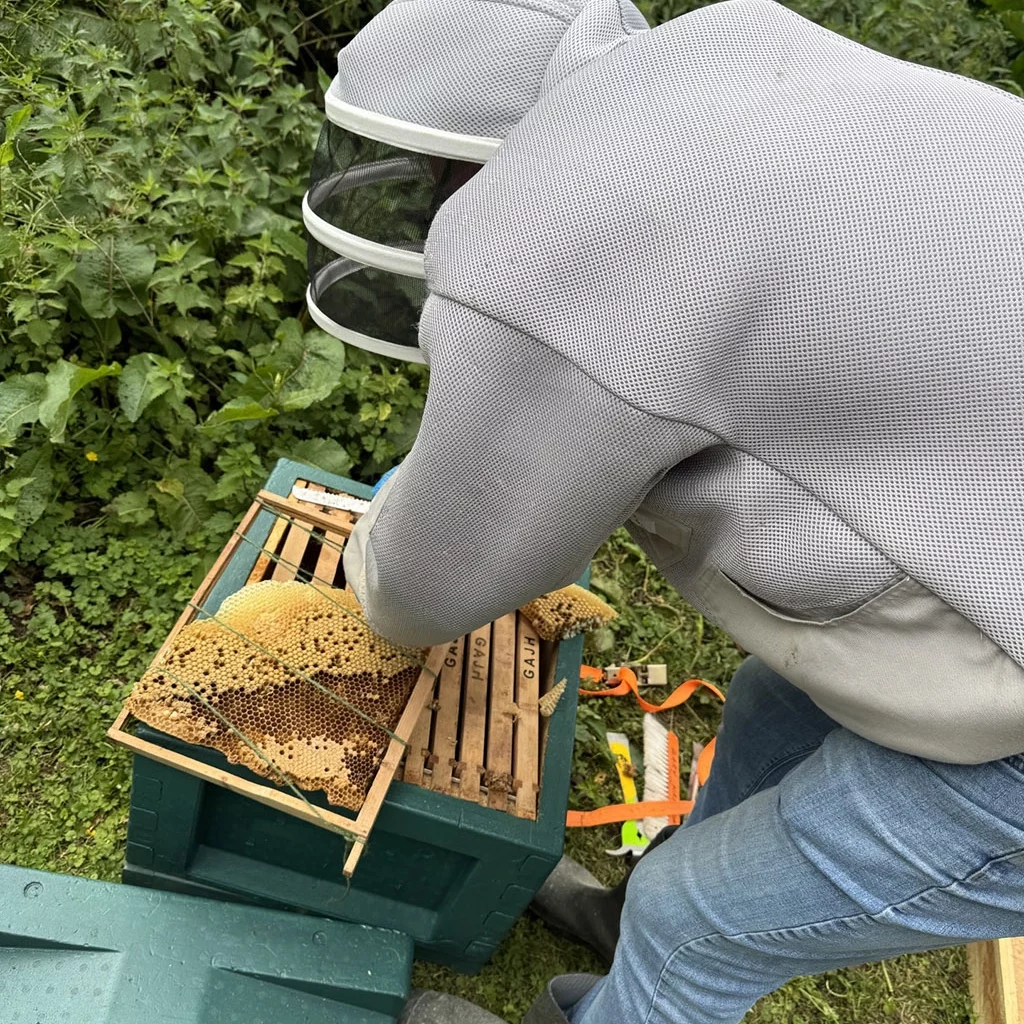
Where possible, we work alongside specialist beekeepers to relocate established honey bee colonies responsibly.
Step 5 – Colony Removal & Aftercare
Once the honey bee colony has been safely removed, we can provide a complete aftercare service to restore the affected area of your property.
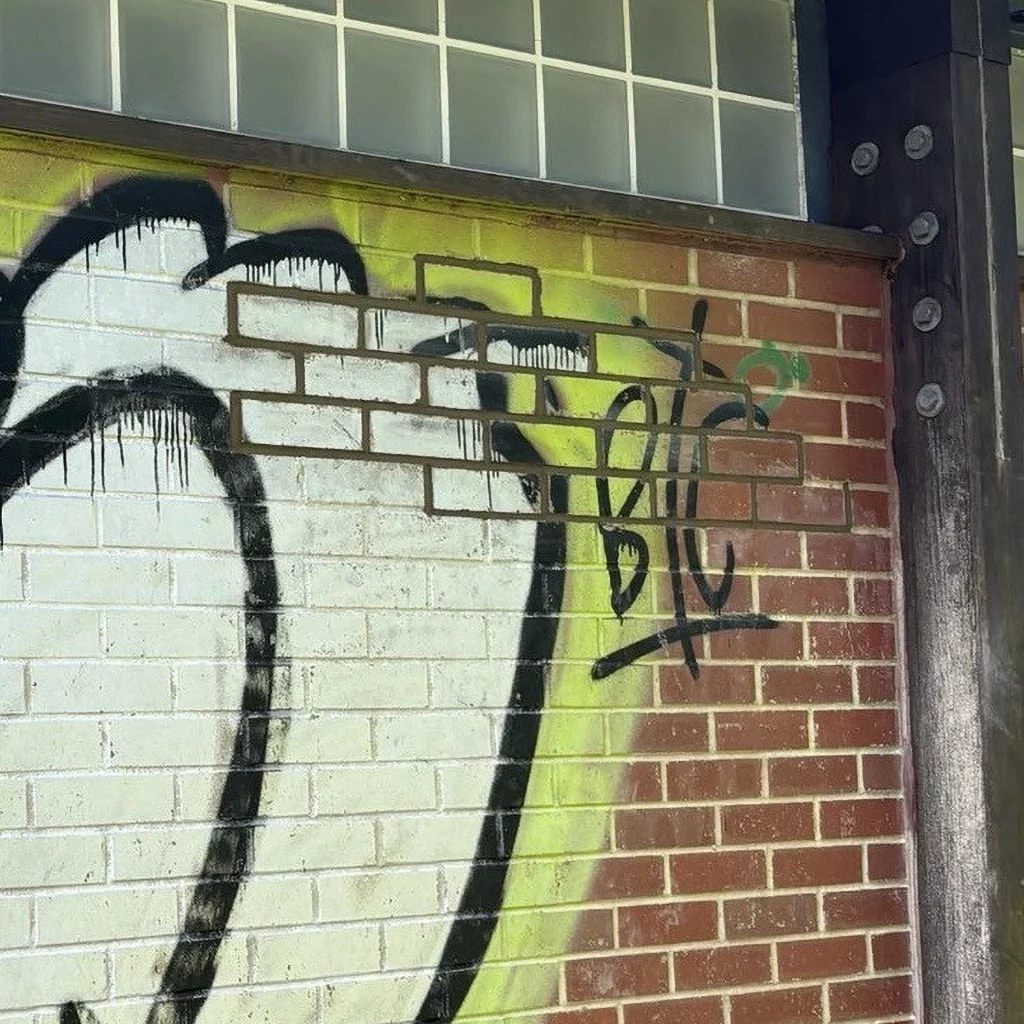
Where access openings have been created to remove the colony, Nex Pest Control works with trusted local bricklayers and building professionals who can carry out any necessary repairs as part of the overall project. This may include rebuilding brickwork, replacing mortar, repairing soffits or restoring other areas that have been opened during the removal process.
Any required building repairs will be clearly detailed within your quotation, allowing the entire process to be managed from start to finish through a single point of contact.
Where accessible, we also recommend the removal of remaining honeycomb and honey deposits to reduce the risk of attracting future swarms or secondary pests.

Why We Work With Specialist Beekeepers
Honey bee removals are very different from standard pest control work.
Through our collaboration with Hitchin Honey, we ensure that bee removals are carried out with the appropriate beekeeping knowledge and equipment.
This partnership allows us to:
- Safely remove established colonies
- Relocate bees into managed hives where possible
- Protect both the property and the bee colony
You can learn more about the beekeeping services provided by Hitchin Honey by visiting their website https://hitchinhoney.bee1st.co.uk/
Our Family Collaboration With Specialist Beekeepers
Honey bee removals require specialist knowledge that combines pest control expertise with professional beekeeping experience. To ensure every removal is handled correctly, Nex Pest Control works in collaboration with experienced beekeepers at Hitchin Honey.
Hitchin Honey is a specialist beekeeping company operated by family members with extensive experience managing honey bee colonies. By working together, we are able to provide a responsible and professional solution when honey bees establish themselves inside buildings.
This collaboration allows us to combine:
- Professional pest control experience from Nex Pest Control
- Specialist beekeeping knowledge from Hitchin Honey
- Safe removal and relocation of honey bee colonies wherever possible
- The correct equipment and expertise for structural bee removals
When a honey bee colony is discovered inside a property, the goal is not simply to remove the insects but to handle the situation in a way that protects both the property and the bees themselves.
By working together as a family collaboration, we ensure that bee removals are approached with the highest level of care, knowledge and responsibility.
You can learn more about our beekeeping partner by visiting the Hitchin Honey website.
Signs Honey Bees May Be Nesting In Your Property
Homeowners often notice bee activity before discovering the actual hive location.
Common signs include:
- Constant bee traffic entering a small hole or gap
- Bees flying in and out of the same location throughout the day
- Bees carrying yellow pollen on their legs
- Buzzing sounds coming from walls or chimneys
- Honey or staining appearing on internal walls
If you notice these signs, the colony may already be well established.
Contact Nex Pest Control today and we can review your photos and provide advice on the next steps.
💬 WhatsApp photos to 07853 726348
Do Not Block the Entrance
One of the most common mistakes is blocking the entrance where bees are entering the property.
This can cause serious problems including:
- Bees entering other parts of the house
- Increased aggression from the colony
- Honey leakage inside walls
Proper removal requires dealing with the colony itself, not just the entry hole.
Get a Honey Bee Removal Quote
If you believe honey bees have moved into your property, Nex Pest Control can help.
Because every situation is different, we usually begin by reviewing photos of the bee activity and entry point.
This allows us to provide advice and determine the best course of action.
Contact Nex Pest Control today to discuss your situation and receive a quote.
💬 WhatsApp photos to 07853 726348
Areas We Cover
We provide honey bee removal services across:
- Hertfordshire
- Bedfordshire
- Cambridgeshire
- Essex
- Buckinghamshire
Frequently Asked Questions
Are honey bees protected in the UK?
Honey bees are not legally protected in the UK in the same way as some wildlife species. However, because honey bees are important pollinators, many removals aim to relocate the colony rather than destroy it whenever possible.
When a colony establishes itself inside a building, the situation must be handled carefully. In many cases specialist beekeepers can assist with removing and relocating the bees to managed hives.
Can honey bees damage a house?
Yes. Honey bee colonies inside buildings can cause structural problems if they are left untreated.
As the colony grows, bees build large wax comb structures and store significant amounts of honey inside cavities such as walls, roofs and chimneys.
If the colony is not properly removed, the remaining honey and wax comb may lead to:
honey leaking into walls or ceilings
staining and structural damage
strong odours inside the property
attraction of other pests
For this reason, colonies inside buildings should be dealt with properly.
Will the bees come back after removal?
If the colony and comb are fully removed and the entry points are sealed, the likelihood of bees returning to the same location is greatly reduced.
However, if honeycomb or scent remains inside the cavity, it may attract future swarms looking for a nesting location. Proper removal and clean-up help prevent this.
Can I remove honey bees myself?
Removing a honey bee colony from a structure can be complex and potentially dangerous.
Colonies may contain thousands of bees, and gaining access to the nest may require opening parts of the building. In addition, honeycomb and stored honey must be removed correctly to avoid future problems.
Professional assistance helps ensure the colony is handled safely and the structure is protected wherever possible.
Do you sell local honey?
Yes. Local honey produced in Hitchin, Hertfordshire is available through our beekeeping partner Hitchin Honey.
The honey is produced by Gary Hammond, a local beekeeper who works alongside Nex Pest Control when honey bee colonies need to be removed and relocated.
You can purchase Hitchin honey here:
https://hitchinhoney.bee1st.co.uk/
Supporting local honey producers helps maintain healthy bee populations and supports responsible beekeeping in the area.
Do you work with local beekeepers?
Yes. Nex Pest Control works in collaboration with Hitchin Honey, a specialist beekeeping operation run by Gary Hammond.
This family collaboration combines pest control experience with practical beekeeping knowledge. As a result, honey bee colonies can often be removed responsibly and relocated where possible.
You can learn more about Hitchin Honey here:
https://hitchinhoney.bee1st.co.uk/
Swarming Honey Bees
During spring and early summer it is common for homeowners to discover large clusters of honey bees gathering on trees, fences, walls or garden structures. This behaviour is known as swarming.
A swarm occurs when a honey bee colony reproduces and a large group of bees leaves the original hive with a queen to establish a new colony elsewhere.
Although a swarm can look alarming, swarming bees are usually temporary and relatively calm. The bees will often gather in a cluster while scout bees search for a suitable place to build a new hive.
Common swarm locations include:
- Tree branches
- Garden fences
- House walls
- Bushes or hedges
- Sheds or outbuildings
- Outdoor furniture
In many cases, swarms will move on naturally within a few hours or days once a suitable nesting location has been found.
If you discover a swarm of honey bees in your garden or on your property, the best course of action is to contact a local beekeeper who can safely collect the swarm and relocate it to a managed hive.
You can find local swarm collectors through the North Herts Beekeepers Association here:
https://www.nhbka.org.uk/swarms/swarm-collectors/
If the swarm moves into a structure such as a wall, chimney, roof or soffit, it may begin establishing a permanent colony. In these situations Nex Pest Control, working alongside specialist beekeepers at Hitchin Honey, can help assess the situation and arrange safe removal.
Need Help With Honey Bees in Your Property?
If honey bees have moved into a wall, roof space, chimney or other part of your property, professional removal may be required.
Nex Pest Control works alongside experienced beekeepers to assess each situation and determine the safest approach.
The easiest way to get started is to send us photos of the bee activity and entry point, allowing us to review the situation and advise you on the next steps.
Contact Nex Pest Control Today
💬 WhatsApp photos to 07853 726348
or
Or request a quote online and we will respond as soon as possible.
Client Reviews & Feedback
We are a small family run business of dedicated Pest Controllers that take great pride in our work.
Where we work
- Stevenage
- Hitchin
- Letchworth
- Baldock
- Welwyn Garden city
- Ware
- Hertford
Where we work (Honey bee removals)
- Hertfordshire
- Bedfordshire
- Cambridgeshire
- Essex
- Buckinghamshire
